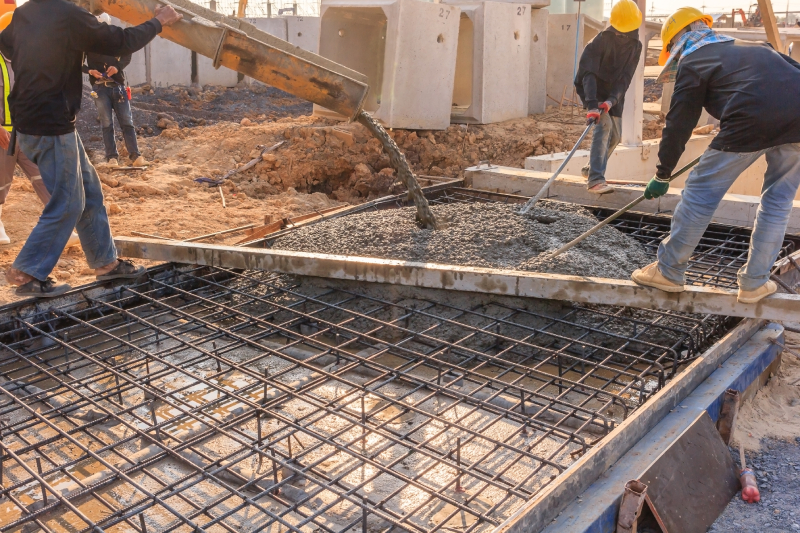
In coastal and marine environments, you’ll find that corrosion of the reinforcing steel is the primary cause of deterioration in steel-reinforced concrete structures. This occurs because Portland cement concrete is porous, allowing chloride exposure from seawater or deicing salts to penetrate and break down the protective passive film on the steel surface. If left unaddressed, this corrosion can lead to concrete deterioration, significant structural damage, and increased risk.
As a structural engineer, you may struggle to compare modern reinforcement and protection methods because information is often siloed by specialized solution providers. This guide bridges that gap by offering an objective comparison of three key approaches to concrete reinforcement and protection:
- Cathodic Protection (CP)
- Concrete Protective Liners (CPL)
- Fiber Reinforced Polymer (FRP) Reinforcement
Using Fiber Reinforced Polymer to Prevent Corrosion at the Source
When you’re seeking proactive concrete reinforcement and protection, FRP rebar serves as a fundamental alternative to traditional steel rebar, employing composite rods of glass fibers in polymer resin that are increasingly preferred.
FRP provides corrosion resistance and is a lightweight material, making it inherently non-corrosive by eliminating the metal that reacts with chlorides and moisture. For new construction in aggressive environments like marine structures and bridge decks exposed to deicing salts, FRP ensures long-term durability. However, it introduces several challenges: not only does it have a lower modulus of elasticity, potentially causing concrete to crack at lower loads, but it also exhibits a brittle failure mode requiring specialized design.
Economically, the initial material cost is two to three times higher than steel, though it may eliminate future repair expenses. Furthermore, manufacturing lacks standardization due to varied raw materials and processes, leading to inconsistent quality.
In quality control, tensile testing is slow and inefficient, but alternatives like horizontal shear or flexural tests offer more practical solutions. While FRP redefines the internal structure to prevent corrosion from within, other methods focus on creating an impermeable shield to protect the concrete surface from external threats.
Creating an Impermeable Barrier With Concrete Protective Liners
When you shift from internal reinforcement to surface protection, CPLs are thin, flexible membranes that serve as a robust barrier for your concrete surfaces. You’ll find these protective liners manufactured from durable polymers like polyethylene (PE), high-density polyethylene (HDPE), and polypropylene (PP).
Their primary function is to:
- Prevent water penetration.
- Shield against chemical attacks, abrasion, and microbial risks; hence, they stop corrosion before it starts.
Furthermore, you can apply CPLs to a wide array of structures, including tunnels, water and sewage treatment plants, and industrial facilities.
For new construction, you integrate CPLs by mounting them to formworks during a cast-in-situ concrete pour. In contrast, rehabilitation projects require you to begin with surface cleaning and preparation to remove contaminants and ensure a dry base.
After preparation, you attach the pre-cut liner using adhesives or mechanical fasteners. However, an alternative like spray-on coatings is often less effective in demanding applications. Otherwise, you risk coatings succumbing to backpressure and wearing away prematurely.
Therefore, by providing a more durable and impermeable barrier, CPLs extend the lifespan of concrete elements and reduce future repair costs. While CPLs proactively shield against external threats, you need an electrochemical approach like Cathodic Protection when corrosion has already contaminated the structure.
Halting Active Corrosion With Cathodic Protection Systems
Unlike the passive barrier methods discussed earlier, CP is an active electrochemical solution designed for rehabilitating existing structures where reinforcing steel corrosion is already active due to chloride exposure. In fact, the U.S. Federal Highway Administration (FHWA) has identified CP as the only rehabilitation technique proven to halt corrosion in salt-contaminated concrete structures, regardless of chloride levels.
The core concept of this reinforcement and protection method is to transform the entire surface of the reinforcing steel into the cathode of an electrochemical cell, effectively stopping the corrosion process. This system incorporates key components: an anode, a cathode, a metallic path, and an electrolyte, which work together to apply a protective current.
To apply this principle, there are two primary forms of CP you can specify:
- Impressed Current Cathodic Protection (ICCP)
- Sacrificial Anode Cathodic Protection (SACP)
ICCP utilizes a permanent external power source, such as a rectifier, to deliver a controlled electrical current to the steel reinforcement. While ICCP offers high controllability, you must monitor it carefully to prevent overprotection, which can cause steel embrittlement, particularly in prestressed components.
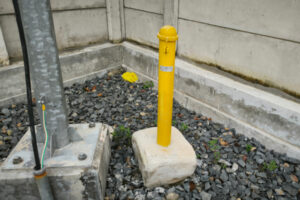
In contrast, SACP employs galvanic anodes made of more electrochemically active metals, like zinc, that corrode preferentially to protect the embedded steel. SACP systems are self-regulating; however, the galvanic anodes are consumed over time, giving them a limited service life. This active electrochemical approach completes our overview of modern protection strategies, setting the stage for a final comparison to help you select the optimal solution.
Read More : Protecting Your Investment Through Smart Renovation and Restoration
Choosing the Right Strategy for Structural Longevity
Ultimately, selecting the right reinforcement and protection strategy is not about identifying a single “best” technology but about choosing the most suitable solution for your specific project context.
For instance:
- FRP Reinforcement excels in new construction to prevent corrosion.
- CP is optimal for rehabilitation to halt active corrosion.
- CPL provides versatile barrier protection in various scenarios.
In practice, combining protection methods to create a layered defense yields the most resilient structures. This holistic approach necessitates shifting focus from initial expenses to analyzing long-term lifecycle costs for proper investment justification.
By assessing the environment, structure age, and lifecycle economics, you can implement a robust defense strategy that ensures true structural longevity.